Skip to content
Sleep Week

Wearables

Three devices you already own, read as one signal.

A ring, a watch, and a phone each measure something the others cannot. Sleep Week reads them together, across the Seven Recovery Systems, and checks them against readings taken in the Sleep Suite.

What each device is good at

Different sensors, different jobs.

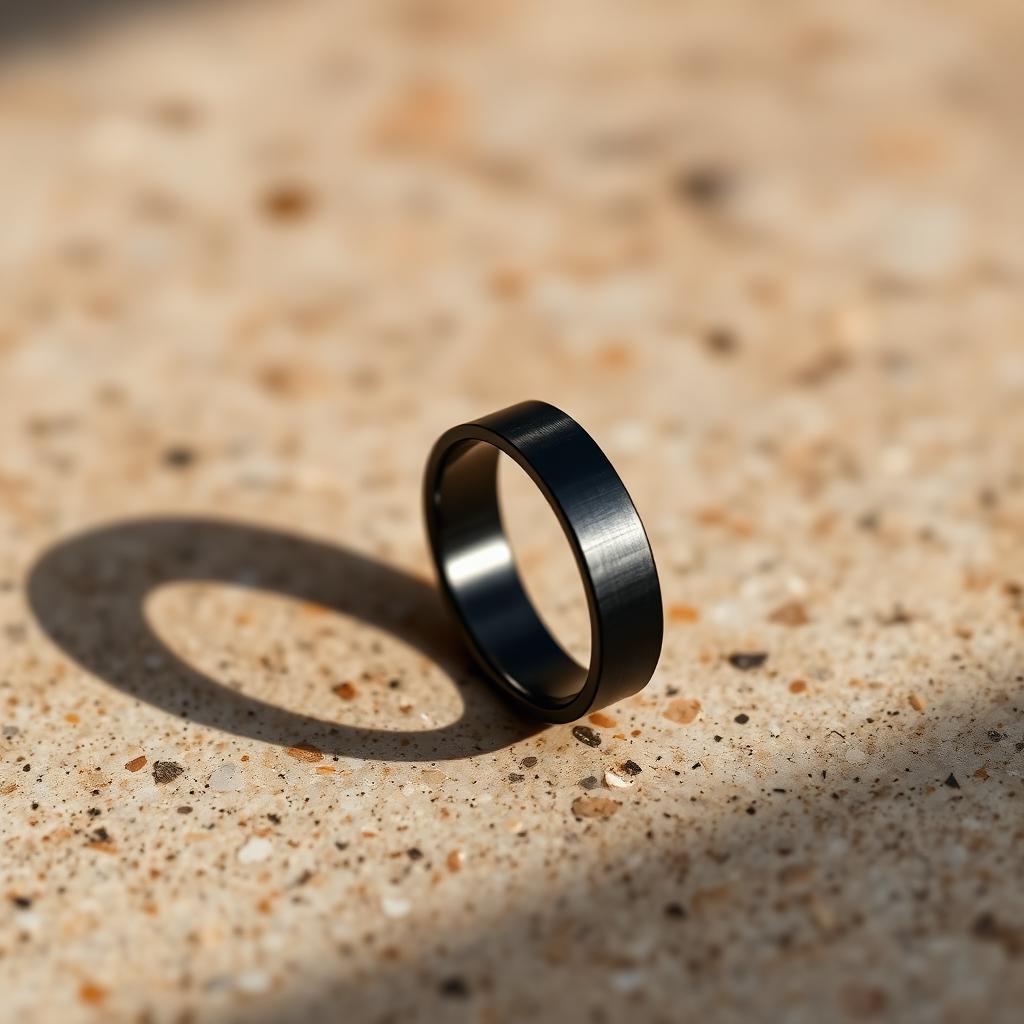
A matte black smart ring resting on a travertine surface in warm low light

Overnight physiology

The smart ring

  • Resting heart rate
  • Heart-rate variability
  • Skin temperature trend
  • Respiratory rate
  • Sleep stages are estimates
  • Short awakenings under-counted
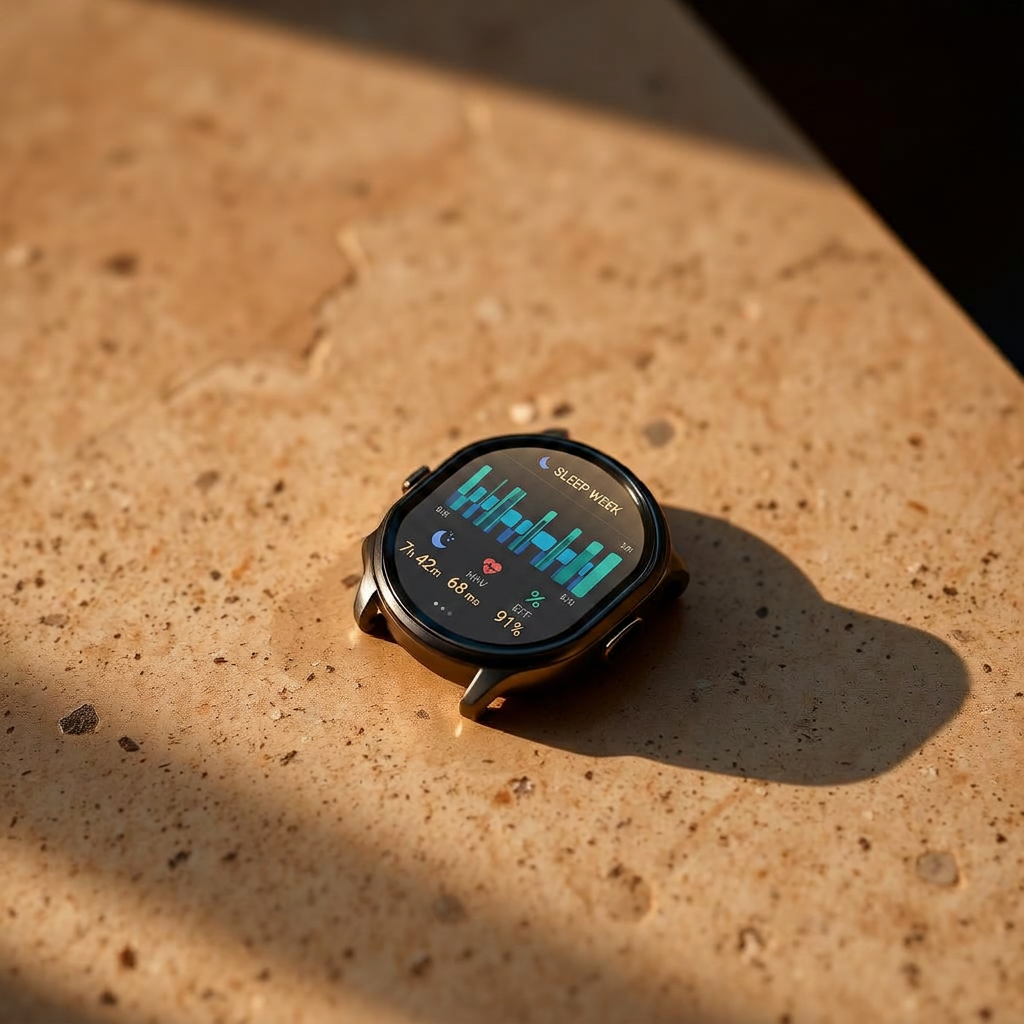
A smartwatch on travertine showing an illustrative Sleep Week sleep summary with stage chart, HRV and efficiency

Daytime load and timing

The watch

  • Movement and activity
  • Daytime heart rate
  • Wake time consistency
  • Blood-oxygen trend
  • Motion artefacts at night
  • Wrist temperature is noisier than finger
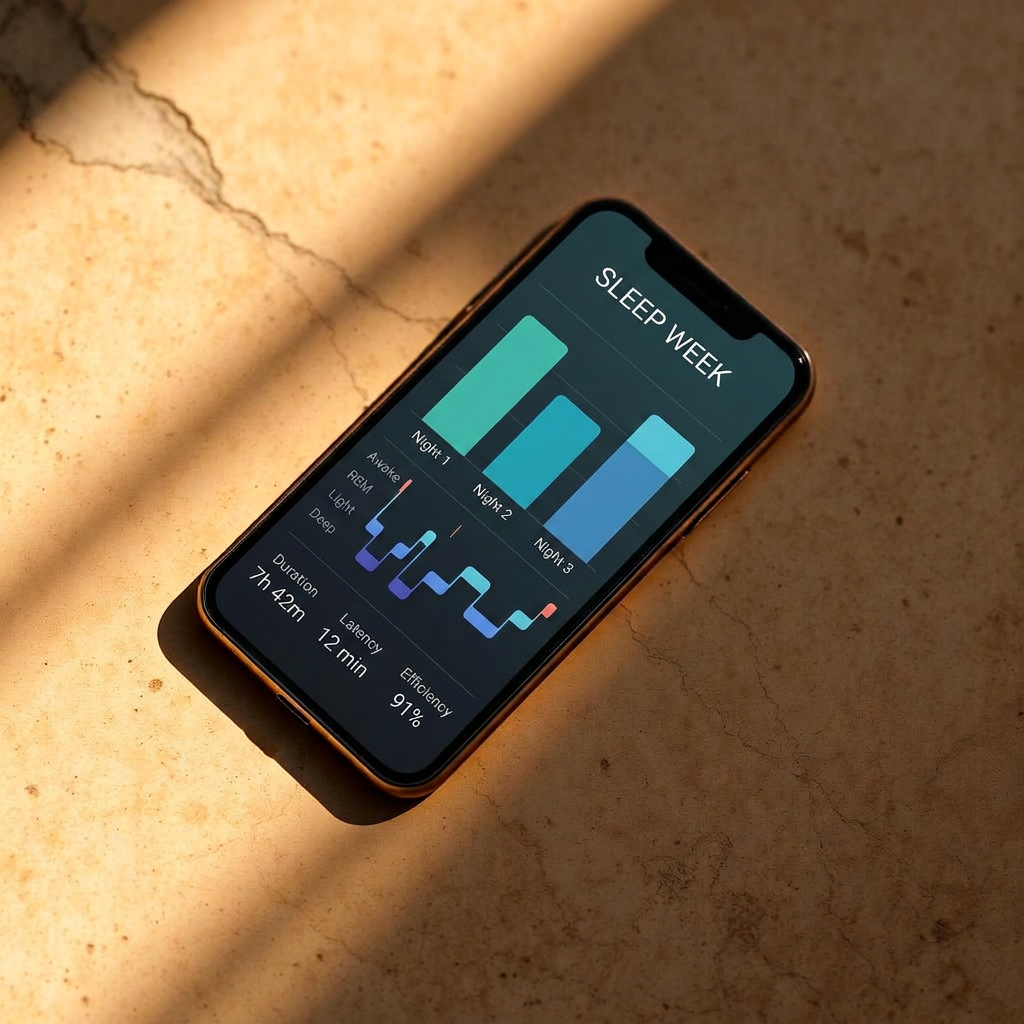
A smartphone on travertine showing an illustrative Sleep Week dashboard with three-night bars and a sleep-stage timeline

Behavior and environment

The phone

  • Light exposure timing
  • Screen use before bed
  • Room sound and noise events
  • Daily check-ins
  • Position-dependent audio
  • Self-report is subjective

Signal quality

Consumer trackers show trends well, but not exact sleep stages.

We treat every number as a trend against your own baseline, not an exact measurement.

3

Nights of wearable data checked against in-suite readings

24/7

Ongoing readings instead of one clinic snapshot

±

Sleep stage estimates given as ranges, never as a diagnosis

90

Days of optional tracking at home after you leave

What the app tells you

What Sleep Week does with it

A nightly sleep score

What actually moved that score

Deep sleep in minutes

How your deep sleep changed against your own baseline

Generic readiness advice

A ranked list of what's disrupting your sleep

Data that stops at checkout

A 90-day plan tracked on the same devices

Guardrails

What we do, and don't, use wearable data for.

Used for

  • Comparing your own nights to each other
  • Detecting timing and consistency patterns
  • Flagging signals that warrant clinical review
  • Measuring whether the take-home plan holds

Never used for

  • Diagnosing sleep apnea or any sleep disorder
  • Changing prescribed therapy or medication
  • Replacing formal in-lab diagnostic testing
  • Emergency or urgent symptom assessment

The device names and models shown here are examples and can change. Bring the devices you already use. You don't need to buy anything, and consumer sleep-stage estimates are not a diagnosis.